
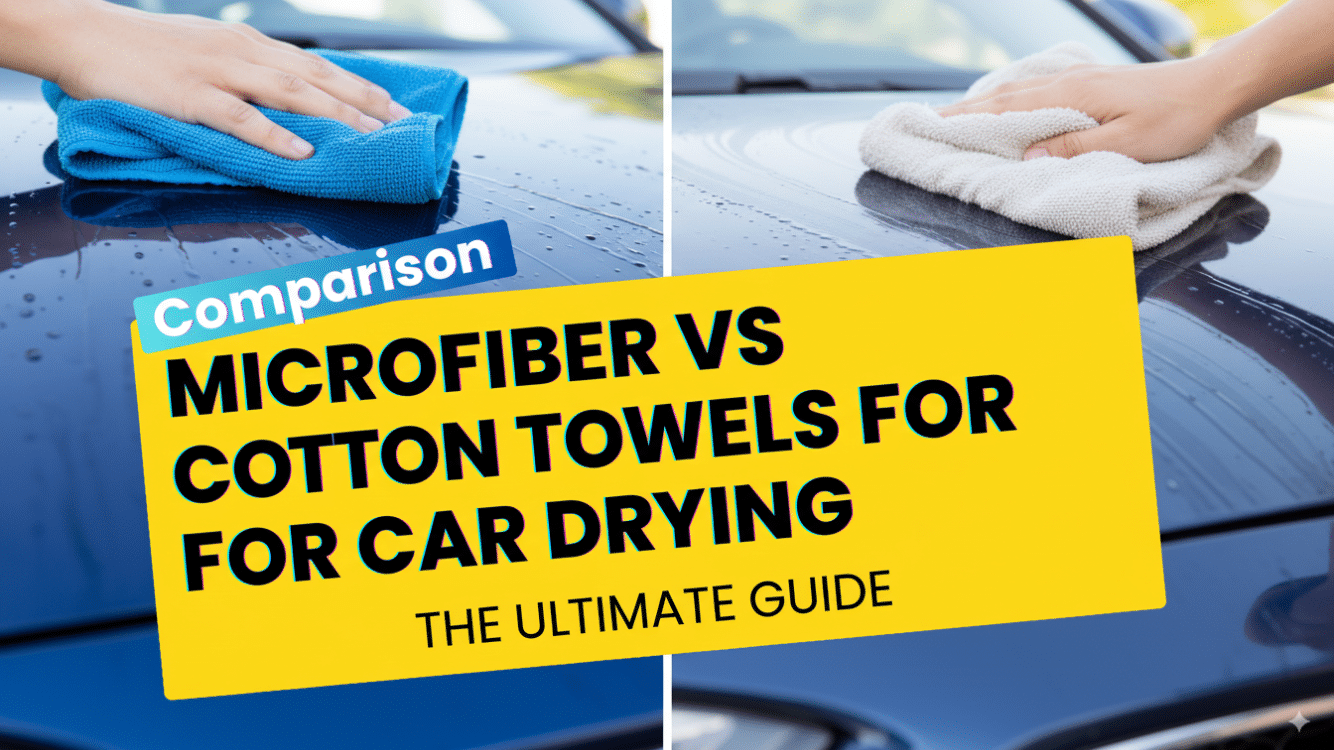
Microfiber vs Cotton Towels for Car Drying
What’s the difference between microfiber and cotton towels for car drying?
The difference between microfiber and cotton towels for car drying is that microfiber absorbs more water, dries faster, leaves no lint or streaks, and protects paint, while cotton often smears water, sheds fibers, and can scratch the finish.
You just finished rinsing your car. Beads of water run down the panels. Now comes the moment of truth: which towel do you grab—microfiber or cotton?
Here’s the straight talk, choosing the wrong towel can cost you time, leave streaks, and even scratch your paint. Let’s break down the differences so you’ll never second-guess your drying game again.
The Problem With Cotton Towels
Cotton towels—bath towels, old t-shirts, or “shop rags”—are everywhere. But common doesn’t mean effective.
- Low Absorption: Cotton fibers hold less water compared to microfiber. You’ll need multiple passes and constant wringing out.
- Lint Galore: Ever notice tiny fuzz left behind? That’s cotton shedding.
- Scratch Risk: Cotton loops are larger and rougher. On car paint, that’s a recipe for micro-scratches or maring .
Bottom line: Yes it cotton towels can work but it really belongs in the bathroom, not the driveway.
Why Microfiber Wins
Microfiber isn’t just a buzzword—it’s engineered for jobs cotton can’t touch.
- Absorbs More, Faster: The split fibers create thousands of tiny channels, soaking up water as you pass it over the wet car.
- Paint-Safe: Ultra-fine fibers trap dirt instead of dragging it across the surface, reducing the risk of scratches.
- Lightweight Efficiency: Even when wet, microfiber stays manageable.
- Streak-Free Finish: No lint, no haze—just clean, dry panels.
Think of microfiber as a tool built for detailing, not a household towel pretending to do the job.
Now the GSM (grams per square meter) make a big difference to. The thicker the microfiber towel the more it can absorb. We did a pretty solid breakdown of towels and GSM and how much water thicker vs thinner towels can hold
That’s why we built the DARCSUD HydroLoop Drying Towel.
Microfiber vs Cotton Car Drying Towels: A Side-by-Side Showdown
| Feature | Microfiber | Cotton |
|---|---|---|
| Absorption | Holds up to 7x its weight in water | Holds less water, needs constant wringing |
| Paint Safety | Ultra-soft, minimizes scratches | Rough loops can mar paint |
| Finish | Streak-free, lint-free | Leaves lint and haze |
| Efficiency | Dries large panels in one pass | Multiple passes needed |
| Durability | Can last hundreds of washes | Breaks down, frays, loses softness |
When Cotton Might Be Okay
To be fair, cotton has one place in car care: interior work.
- Wiping leather seats
- Cleaning vinyl or rubber
- General shop cleanup
But for paint and glass? Microfiber is non-negotiable.
The Real Cost of Using Cotton
Here’s the hidden problem… every streak, every scratch, every wasted minute re-drying your car adds up. Over time, that means more polishing, more products, more money.
Switching to microfiber isn’t about luxury. It’s about saving time, protecting your paint, and getting pro results..
Final Word
If you’re serious about your car, microfiber vs cotton car drying towels isn’t even a debate—microfiber is the only choice.
And if you want microfiber built for enthusiasts who hate compromise? That’s where products like the DARCSUD HydroLoop Drying Towel come in. One pass, no streaks, no wasted time.